




By Dadson A. Musa
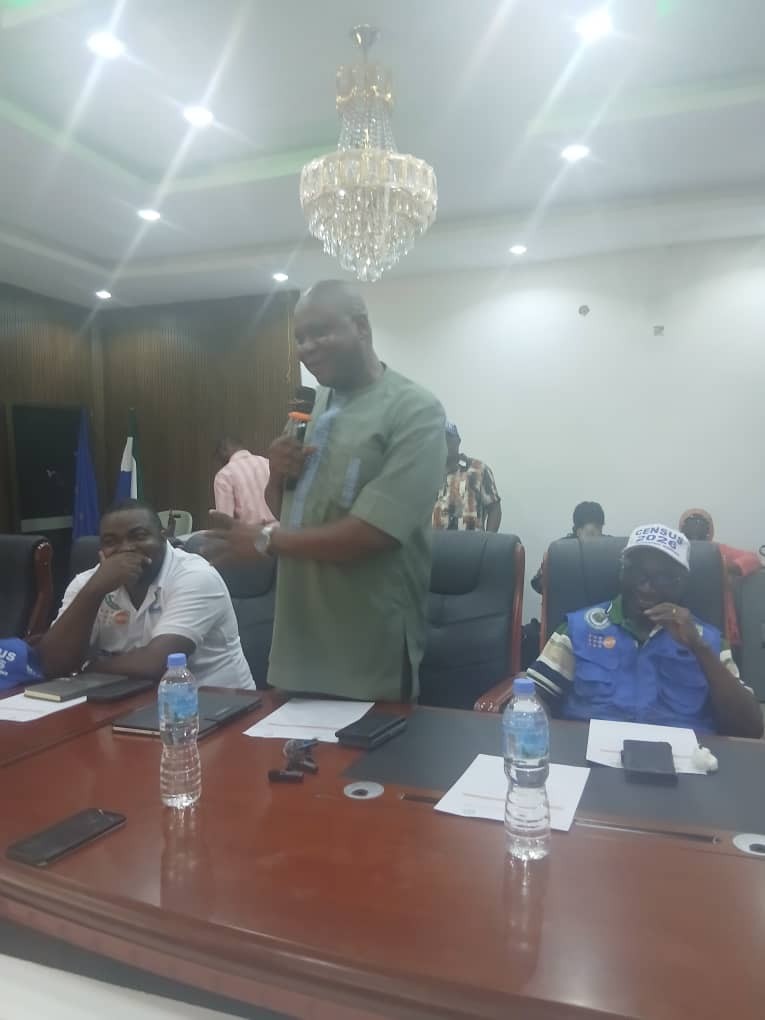
Preparations for Sierra Leone’s next population and housing census have moved into a new phase as Statistics Sierra Leone commenced the Training of Trainers (TOT) programme for the Southern Region hosted in Bo. The exercise forms part of activities leading to the national census scheduled for December this year.
The training, which began on October 26, 2026, has brought together participants who are expected to train enumerators that will later be deployed across the Southern Province for the census exercise. The programme is expected to run for ten days.
Grace Okereke, Regional Communications Officer South for Statistics Sierra Leone, chaired the opening ceremony. She welcomed participants and guests and thanked them for attending the training. She also underscored the importance of the programme as the country prepares for one of its most important statistical exercises.
Attention quickly turned to the significance of the census and the role participants are expected to play in the process.
Regional Statistician South, Francis Kobba, reminded trainees that the success of the national census would depend largely on the quality of preparation given to those who will collect information from households. He encouraged participants to take the training seriously and make full use of the opportunity.
“Enumeration is about to start, which is going to lay the foundation for the development of our country, Sierra Leone,” Kobba said.
He noted that census data serves a wider purpose than simply determining population figures. According to him, development partners, government institutions, researchers, and planners all rely on census information when making decisions and allocating resources.
“The collection of data is not only for Sierra Leoneans but also for development partners,” he stated.
As discussions continued, Chairman of the Bo District Council, Victor Korseh Hindowa, highlighted the role of local councils in national development planning. He explained that councils have a legal responsibility to coordinate development activities within their localities and therefore have a direct interest in the success of the census exercise.
“It is the duty of councils to coordinate all development activities, which is the reason we are involved in the census process, as provided for in the Local Government Act 2004,” Chairman Hindowa said.
He stressed that population figures influence how resources are shared across districts and communities. For that reason, he called on the trainees to pay close attention during the training and ensure that they fully understand the processes that will guide the census.
“The data collected determines the allocation of resources to various districts,” he said, while emphasizing the need for accuracy at every stage of the exercise.
Chairman Hindowa further encouraged participants to give their best during the training, noting that mistakes made during data collection could have long-term consequences for planning and development.
The focus then shifted to the training process itself.
Mohamed Gbato Kemokai, Regional Head of Statistics Council, commended staff and field workers for the work already completed during the mapping exercise and pilot census. Those preliminary exercises, he explained, provided valuable lessons that are now helping to shape preparations for the main census.
Kemokai however reminded participants that attending the training alone would not guarantee their progression to the next stage.
“You are only going to qualify if you pass the examination at the end of the training,” he cautioned.
His message served as a reminder that Statistics Sierra Leone intends to maintain standards in selecting those who will eventually train field enumerators.
Speaking on behalf of the Statistician General, who was unable to attend the event, Francis Kobba emphasized the importance of the training programme to the overall success of the census.
“The quality of the census is going to depend on the quality of training delivered,” he said.
He explained that well-trained personnel are essential if the country is to obtain reliable population figures and accurate information on households and communities.
Throughout the opening session, speakers repeatedly highlighted the link between accurate census data and national development. Population figures are often used to guide decision-making in areas such as health, education, infrastructure, agriculture, and local governance. As a result, officials stressed the need for a credible and professionally conducted enumeration process.
The exercise reached its high point when Chairman of the Statistics Council, Moses Williams, addressed the gathering. He emphasized accountability and prudent use of resources throughout the census process.
“Value for money must be delivered,” Williams stated, while urging all those involved in the exercise to ensure that resources allocated to the census produce the desired results.
Following his remarks, Chairman Victor Korseh Hindowa officially declared the training open.
The opening ceremony concluded with a vote of thanks delivered by Bo District Statistician, Madam Hindowa, who expressed appreciation to officials, facilitators, and participants for their commitment to the programme.
Over the next ten days, trainees will undergo intensive sessions designed to prepare them for the next phase of the census exercise. Upon completion, successful participants are expected to train enumerators who will be responsible for collecting information from households across the Southern Province as Sierra Leone prepares for the December census.
Copyright –Published in Expo Times News on Wednesday, 28th October 2026 (ExpoTimes News – Expo Media Group (expomediasl.com)