



By Anthony Vandy M-1
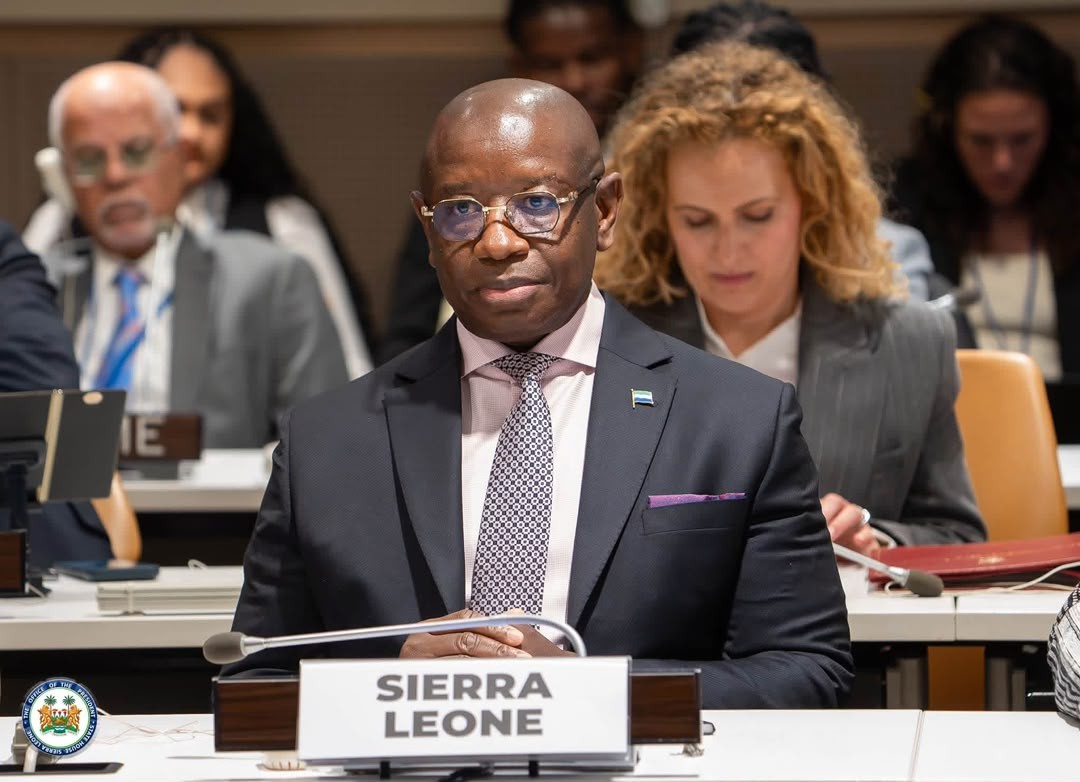
Since assuming office in 2018, His Excellency President Dr. Julius Maada Bio has pursued a development agenda centered on education, healthcare, agriculture, governance and human capital development. His eight years in office have brought notable policy changes, although the country continues to face significant economic and social challenges.
One of the most prominent pillars of his administration has been education. The Free Quality School Education programme has helped reduce the financial burden of schooling for millions of children, particularly those from low-income and vulnerable families.
Reported Ministry of Basic and Senior Secondary Education figures show that school enrolment increased from approximately 1.98 million pupils in 2018 to 3.34 million in 2022, an increase of about 69 per cent. The number of schools also rose from 10,747 to 12,466 over the same period.
Girls have benefited from this expansion. UNICEF reported that overall enrolment increased by 58 per cent between 2018 and 2021. Senior secondary enrolment rose by 98 per cent, while junior secondary enrolment increased by 87 per cent.
In 2021, senior secondary schools enrolled 203,108 girls compared with 206,040 boys, suggesting near numerical parity at that level. These figures demonstrate significant progress in access to quality education
President Bio government has also supported school infrastructure, teaching and learning materials, school feeding and teacher development. These efforts reflect a broader recognition that Sierra Leone’s future depends not only on its natural resources but also on the knowledge, skills and potential of its people.
Agriculture has gained renewed attention through the Feed Salone programme under President Bio’s leadership. Through the Feed Salone programme, the government has sought to strengthen domestic food production, improve food security and reduce dependence on imported food. At the same time, efforts to promote tourism, technology and private-sector development have formed part of a wider push to diversify the economy.
Government figures for 2024 placed rice cultivation at approximately 1.9 million hectares, with an average yield of 2.56 tons per hectare. Agriculture accounted for about 32.1 per cent of gross domestic product, highlighting its importance to the national economy.
Reported interventions included distributing rice mills, threshers and harvesters, supplying four million cocoa seedlings, rehabilitating inland valley swamps and supporting feeder-road construction. The government also reported an agricultural credit facility worth US$10 million to support rice, onion and poultry production.
The Feed Salone Year Two Report stated that rice self-sufficiency reached 72 per cent in 2024, although the country continued importing substantial quantities of rice. The report also recorded a decline in the reported price of local rice from NLe 25 per kilogram in September 2024 to NLe 22 in September 2025.
Healthcare remains another important measure of national development, particularly maternal and child health. Healthcare and social protection have also featured in President Bio’s government development agenda. Investments in health facilities, maternal and child health services, and major projects such as the 34 Military Hospital reflect efforts to improve access to healthcare.
United Nations estimates indicate that Sierra Leone’s maternal mortality ratio declined from approximately 443 deaths per 100,000 live births in 2020 to 354 in 2023, a reduction of about 20 per cent. Other health indicators show that approximately 83 per cent of births took place in health facilities in 2023, while 87 per cent were attended by skilled personnel. These figures suggest improved access to essential maternal healthcare.
Legislation aimed at protecting women and girls has further strengthened the administration’s social policy agenda. These priorities are important because national development cannot be measured solely by the number of roads constructed or buildings completed. It must also be measured by whether women receive safe maternal care, children are protected from abuse, and vulnerable citizens can access essential services.
Infrastructure, electricity and digital connectivity remain equally important to Sierra Leone’s development. Better roads can connect farmers to markets, improve access to schools and hospitals, and encourage trade between communities.
Roads and bridges are essential for trade, healthcare, education and economic development. Figures reported by the Ministry of Information and Civic Education in February 2026, citing the Sierra Leone Roads Authority, indicated that approximately 442.86 kilometers of roads had been constructed or rehabilitated between 2018 and 2025. More than 56 bridges were also reported constructed during the period
Electricity access is another important indicator of His Excellency’s developmental strives. World Bank data show that access to electricity increased from approximately 26.1% of Sierra Leone’s population in 2018 to 39.2 per cent in 2024.
This represents an increase of 13.1%, suggesting that more people gained access to electricity during the period. However, most of the population still lacked access according to the same measure in 2024. Reliable electricity can support businesses, improve healthcare delivery and create better learning conditions.
President Bio’s years in office have been marked by a development approach that places considerable emphasis on human capital, education, healthcare, agriculture and institutional accountability. These priorities reflect an attempt to address some of the country’s longstanding challenges and lay the foundation for more sustainable development.
President Bio’s administration has also emphasised accountability through measures such as the Commissions of Inquiry into the management of public resources under the previous administration and the continued work of the Anti-Corruption Commission. These efforts reflect the importance of responsible public administration.
Overall, the available figures point to progress in school enrolment, maternal health indicators, agricultural investment, road development and electricity access. It is also important to recognise that national development results from the combined efforts of government institutions, previous administrations, private businesses and international partners.
Ultimately, President Bio’s eight years in office should be assessed by both the progress achieved and the challenges that remain unresolved. Sierra Leone needs policies that deliver measurable results, institutions that serve the public and leadership that turns national ambitions into lasting improvements in people’s lives.
President Bio’s eight years in office have not resolved every problem facing Sierra Leone, but they have established a policy record that warrants careful and balanced examination that should focus on evidence, accountability and practical outcomes. That is the standard by which President Bio’s record should be judged, and it is the standard that every future administration must also meet.
Copyright –Published in Expo Times News on Wednesday, 28th October 2026 (ExpoTimes News – Expo Media Group (expomediasl.com)