



By Josephine Sesay
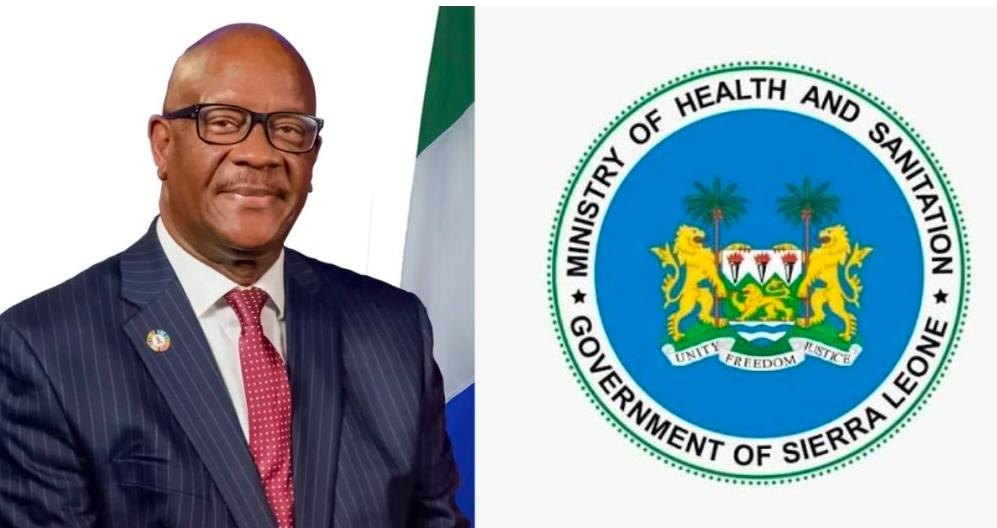
The Ministry of Health (MoH), in collaboration with the National Public Health Agency (NPHA), has launched an innovative framework designed to assess how prepared countries are to respond to disease outbreaks in practice, rather than merely evaluating preparedness on paper.
The new framework, known as the Architectural and Operational Readiness Gap (AORG), was developed by the NPHA and piloted during Sierra Leone’s response to the Bundibugyo virus disease emergency declared by the World Health Organization (WHO) on 16 May 2026.
Following the WHO declaration, the Ministry of Health and the NPHA completed the ECOWAS Regional Rapid Assessment and conducted an internal review of the country’s emergency preparedness. The assessment found that Sierra Leone has achieved an 80 percent score in architectural readiness, reflecting the existence of emergency response plans, coordination mechanisms, infrastructure and institutional systems.
However, the country’s operational readiness was assessed at 50 percent, highlighting challenges in translating those systems into effective action during the critical early stages of an outbreak. The findings revealed a 30-percentage-point readiness gap, prompting the Ministry and the NPHA to develop a time-bound improvement plan with clearly assigned responsibilities for relevant departments to strengthen emergency response capacity.
According to the Ministry of Health, the AORG framework addresses a major limitation in existing global preparedness assessment tools, which often measure the existence of emergency plans and infrastructure but provide limited insight into whether those systems can function effectively during an actual public health emergency.
Unlike many existing assessment tools, the AORG framework complements current preparedness evaluations without requiring additional surveys or significant financial resources, making it a practical and cost-effective model that could be readily adopted by countries across the ECOWAS region.
The assessment also identified several priority areas for strengthening regional preparedness. These include enhancing laboratory capacity to detect multiple Ebola virus strains, including Bundibugyo virus disease; sustaining infection prevention and control systems between outbreaks; and ensuring that emergency health funds are readily accessible whenever public health crises arise.
Health authorities believe that if the AORG is adopted across ECOWAS member states, the framework could provide a standardized approach to measuring emergency preparedness, while strengthening regional coordination through the West African Health Organisation (WAHO) and the Africa Centres for Disease Control and Prevention (Africa CDC).
The initiative builds on Sierra Leone’s public health reforms implemented in the aftermath of the devastating 2014–2016 Ebola outbreak, including the establishment of the National Public Health Agency and the enactment of the Public Health Act 2022.
Officials say the launch of the AORG framework underscores Sierra Leone’s growing leadership in strengthening national and regional health security. They believe the country’s experience in developing the framework can serve as a model for other West African nations seeking to enhance their preparedness for and response to future disease outbreaks.
Copyright –Published in Expo Times News on Monday, 6th July 2026 (ExpoTimes News – Expo Media Group (expomediasl.com)