







By Emma Black
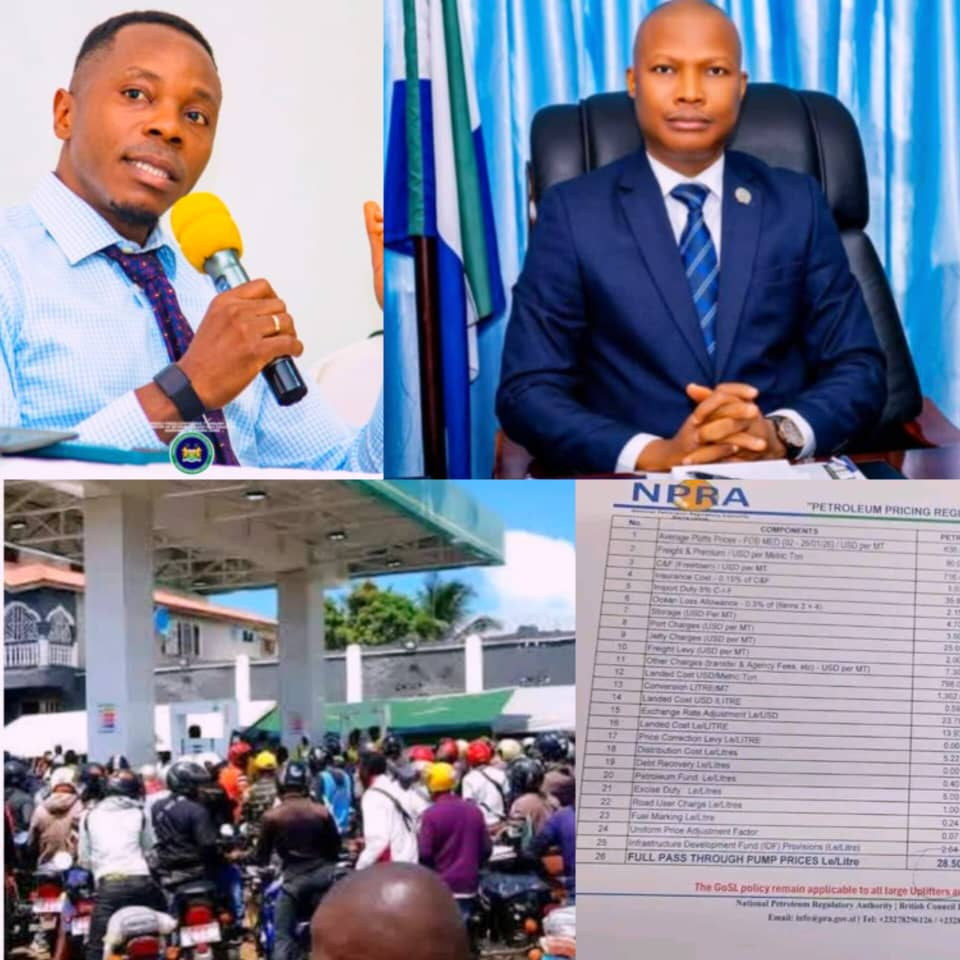
The recent upward adjustment in fuel pump prices has triggered widespread debate across Sierra Leone, intensifying public scrutiny of the government’s economic management and the roles of key officials involved in policy coordination. As higher fuel costs ripple through transportation, food prices, and household expenses, many citizens are calling for clearer explanations and greater accountability from decision-makers.
At the center of the discussion is Chief Minister Dr. David Moinina Sengeh, whose position places him at the heart of government policy coordination. While official sources insist that fuel pricing decisions are reached through collective Cabinet deliberations shaped by global oil market trends, exchange rate pressures, and domestic fiscal realities critics argue that the Chief Minister’s strategic influence makes him inseparable from outcomes that significantly affect everyday life.
Civil society organizations and energy sector analysts have raised concerns about both the timing and impact of the price increase. They question whether sufficient attention was given to prevailing economic hardships faced by citizens and whether alternative measures could have softened the blow. According to these groups, the latest adjustment has compounded the cost-of-living crisis and weakened public confidence in the government’s ability to manage economic pressures.
Defenders of Dr. Sengeh counter that his role is primarily one of coordination rather than direct implementation. They emphasize that fuel pricing is guided by technical formulas applied by mandated institutions such as the National Petroleum Regulatory Authority, with Cabinet oversight focused on policy coherence rather than unilateral decision-making. From this perspective, the Chief Minister is seen as a facilitator of policy processes rather than the architect of specific pricing outcomes.
Nevertheless, the controversy has highlighted a broader governance dilemma: how to reconcile harsh economic realities with the need for social protection. Analysts note that fuel pricing extends beyond technical calculations, carrying political and social implications that demand transparent communication to sustain public trust.
Public reaction has been swift and vocal. Transport operators, market traders, and daily commuters have expressed frustration over rising costs, while radio phone-in programs and social media platforms have become key spaces for debate. Many citizens are urging leaders to communicate policy decisions in clearer, more relatable terms and to demonstrate sensitivity to public hardship.
In response, government officials have reiterated commitments to mitigating measures and continued reviews of economic policies. They acknowledge that while some decisions are difficult, they must be accompanied by targeted interventions to protect vulnerable groups.
As discussions continue, the fuel price increase remains a prominent issue in national discourse. The unfolding debate underscores the political weight of economic policy coordination and reinforces the importance of openness and accountability in maintaining public confidence during challenging times.
Copyright –Published in Expo Times News on Wednesday, 4th February 2026 (ExpoTimes News – Expo Media Group (expomediasl.com)