



By Kadiatu A Turay
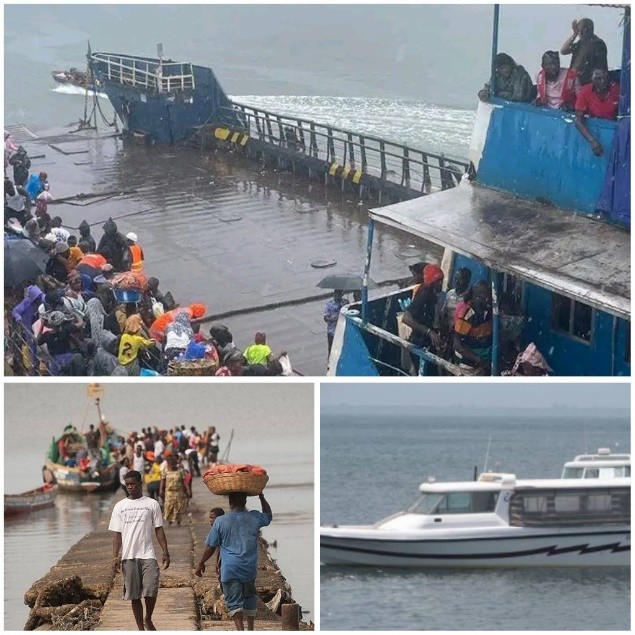
Sea transportation remains one of the most vital yet underdeveloped sectors in many coastal and riverine countries, including Sierra Leone. With a long Atlantic coastline, numerous rivers, and island communities, water transport should be a strong pillar of national development. Instead, it continues to face serious challenges that affect safety, trade, livelihoods, and national integration. This article examines the key challenges confronting sea transportation, what the government is doing to address them, and the lived experiences of local people, operators, and other stakeholders whose daily lives depend on the sea.
The Importance of Sea Transportation
For coastal and island communities, sea transportation is not a luxury it is a lifeline. From fishing communities in Goderich and Tombo to traders moving goods between Freetown to Lungi and the provinces, water transport provides access to markets, healthcare, education, and employment. It also plays a major role in tourism, fisheries, and regional trade.
According to maritime experts, efficient sea transport reduces pressure on overburdened road networks and lowers the cost of moving bulky goods. “If properly developed, sea transportation can significantly cut transportation costs and improve national connectivity,” noted a maritime consultant in Freetown.
Despite this potential, the sector continues to struggle.
Major Challenges Facing Sea Transportation.
Firstly, Safety Concerns and Accidents.
One of the most pressing challenges is safety. Overloaded boats, poor maintenance, lack of life jackets, and inadequate enforcement of maritime regulations have led to frequent accidents.
A fisherman from Tombo shared his concern: “Every time we enter the sea, we pray. Some boats are too old, some carry too many people, and sometimes the weather changes suddenly. If something happens, help is not always close.”
The absence of modern navigation equipment and trained crew members increases the risk, especially during the rainy season when visibility is low and waters are rough.
Secondly, Poor Infrastructure.
Many jetties and landing sites across the country are either dilapidated or non-existent. Passengers often board boats from unsafe shorelines, making the process risky for children, pregnant women, and the elderly.
A trader who frequently travels by sea lamented: “Sometimes we have to wade into the water with our goods on our heads before entering the boat. It is not dignified, and it is dangerous.”
In Freetown, while the main ports exist, congestion and outdated facilities slow down operations, affecting both passengers and cargo movement.
Thirdly, High Cost of Operations.
Boat operators face rising costs of fuel, spare parts, and maintenance. These costs are often passed on to passengers, making sea travel expensive for low-income earners.
A boat owner explained: “Fuel prices keep going up, and spare parts are hard to find. If we don’t increase fares, we cannot survive, but passengers complain and rightly so.”
This cycle affects affordability and limits the growth of the sector.
Fourthly, Weak Regulation and Enforcement
Although maritime laws and institutions exist, enforcement remains inconsistent. Unlicensed operators, lack of routine inspections, and weak monitoring systems undermine safety and service quality.
A civil society advocate noted: “We have regulations on paper, but implementation is the problem. Until enforcement is strengthened, lives will continue to be at risk.”
Moreover, Environmental and Climate Challenges.
Climate change has introduced new risks. Rising sea levels, coastal erosion, and unpredictable weather patterns make navigation more dangerous and damage coastal infrastructure.
A resident of a coastal community observed: “The sea is not like before. The waves are stronger, and sometimes landing points disappear after heavy rains.”
What the Government Is Doing.
Recognizing the importance of sea transportation, the government has taken steps though gradual to improve the sector.
Strengthening Maritime Institutions.
The government, through maritime authorities and relevant ministries, has been working to improve oversight of sea transport operations. This includes registration of vessels, licensing of operators, and training of crew members.
A government official stated: “Our goal is to ensure that only seaworthy vessels operate and that safety standards are respected. This is a process, but we are committed.”
Infrastructure Development.
Efforts are being made to rehabilitate and construct jetties and landing sites in key locations. These projects aim to improve passenger safety and facilitate smoother movement of goods.
In some communities, newly constructed or renovated jetties have already made a difference. A local leader shared: “Since the new jetty was built, accidents during boarding have reduced, and business has improved.”
Promoting Safety Measures.
The government, sometimes in partnership with development partners, has distributed life jackets and conducted public awareness campaigns on sea safety. Operators are being encouraged and, in some cases, required to carry safety equipment on board.
A passenger who recently travelled Freetown to Lungi by sea “This time, they checked life jackets before we boarded. It made me feel a bit safer.”
Supporting Private Sector Participation.
Policies are being developed to encourage private investment in sea transportation, including modern ferries and cargo vessels. Public-private partnerships are seen as a way to bring in expertise and funding.
An economist explained: “Government alone cannot do everything. By creating the right environment, private investors can help modernize the sector.”
Regional and International Cooperation.
The government also collaborates with regional and international maritime bodies to improve standards, training, and information sharing. Such cooperation helps align local practices with global best standards.
Voices from Local Communities.
While policies and projects matter, the real test lies in their impact on ordinary people.
Mariam Kallon, a fish trader from a riverine village said: “We don’t ask for too much. We just want safe boats, fair prices, and a place where we can enter without fear.”
A youth involved in boat operations added: “If the sector improves, more young people can get jobs not only as boat operators, but in maintenance, tourism, and trade.”
Women, who dominate fish processing and petty trading, are particularly affected. One woman noted: “When boats are delayed or unsafe, our goods spoil, and we lose money. Improving sea transport is also supporting women.”
The Way Forward.
Experts agree that addressing sea transportation challenges requires a holistic approach. Infrastructure, safety, regulation, environmental protection, and community involvement must go hand in hand.
A maritime safety advocate summarized it well: “Sea transportation is about people, not just boats. When you invest in safety and systems, you protect lives and grow the economy at the same time.”
Stronger community engagement can also help. Local people understand the sea and its risks and should be part of planning and monitoring processes.
Sea transportation holds immense potential to transform national connectivity, boost trade, and improve livelihoods. While challenges such as safety risks, poor infrastructure, and high costs persist, government interventions show a growing recognition of the sector’s importance.
Progress may be gradual, but with sustained commitment, transparent policies, and the inclusion of local voices, sea transportation can become safer, more affordable, and more reliable. As one coastal resident put it: “The sea feeds us and connects us. If we take care of it and manage it well, it will take care of us too.”
The future of sea transportation depends not only on government action but on collective responsibility from operators, communities, and passengers alike. Only then can the sea truly become a pathway to development rather than a source of fear.
Copyright –Published in Expo Times News on Wednesday, 28th January 2026 (ExpoTimes News – Expo Media Group (expomediasl.com)