




By Tamba Tengbeh
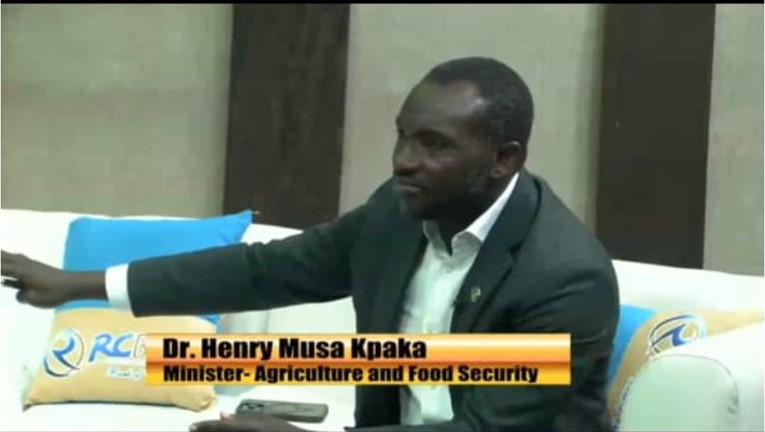
The Minister of Agriculture and Food Security, Dr. Henry Musa Kpaka, has emphasized that rice remains the core crop driving Sierra Leone’s agricultural transformation under the Feed Salone initiative.
Speaking on the Wake Up Sierra Leone program on AYV television,this morning,the Minister made the remarks while discussing the release of the Feed Salone Year Two report, which highlights progress and remaining challenges in the government’s efforts to boost food production and enhance national food security.
Dr. Kpaka stated that while rice is the primary value chain within the country’s agricultural development framework, other key crops such as cassava, orange, sweet potato, plantain, groundnut, and sesame continue to play essential roles in improving nutrition and expanding food security across communities.
“Rice constitutes the primary value chain within our Feed Salone Strategy,” the Minister said. “But alongside rice, we are also prioritizing important crops that support a balanced and nutritious food system for households nationwide.”
According to the Minister, although Sierra Leone has recorded progress in agricultural production, the country still faces structural challenges that require coordinated and sustained efforts. These challenges include achieving national food self-sufficiency, expanding employment opportunities for youth, and improving public access to diverse and nutritious diets.
“These challenges are interconnected,” Dr. Kpaka explained. “We cannot treat them in isolation. Addressing one supports progress in the others.”
“Our strategy prioritizes the enhancement of agricultural productivity through increased crop yields as a practical entry point,” he noted. “By boosting production, we address both food availability and economic empowerment, especially for smallholder farmers and rural households.”
Dr. Kpaka highlighted that teaching farmers to adopt improved farming practices, such as the use of high-yield seed varieties and modern cultivation methods, has been met with positive acceptance and is relatively easy to scale nationwide.
However, he pointed out that influencing consumer dietary habits,necessary for improving national nutrition levels—will take a sustained effort involving community education, public awareness, and behavioral change interventions.
“Changing how people produce food is more straightforward than changing how they eat,” he said. “Dietary habits are cultural and deeply rooted, so they require long-term investment in nutrition education and awareness.”
The Feed Salone Year Two report outlines progress in expanding rice production, strengthening farmer support systems, promoting youth participation in agribusiness, and working more closely with private sector partners.
The Minister reaffirmed that the ultimate goal of the Feed Salone initiative is to ensure that Sierra Leone grows more of what it consumes, reduces dependency on imports, increases rural incomes, and delivers better nutrition outcomes for households across the country.