



By Kadiatu A. Turay
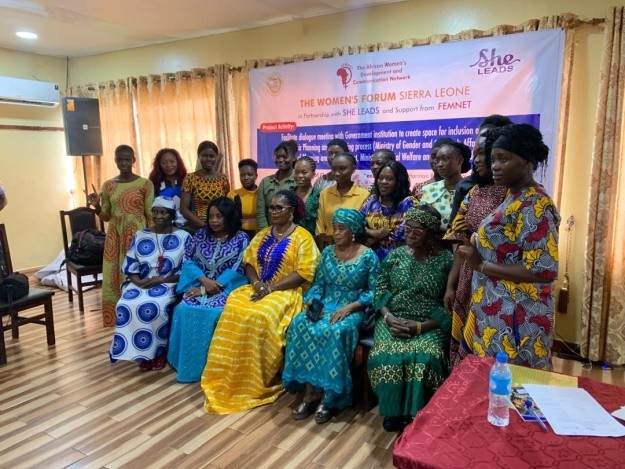
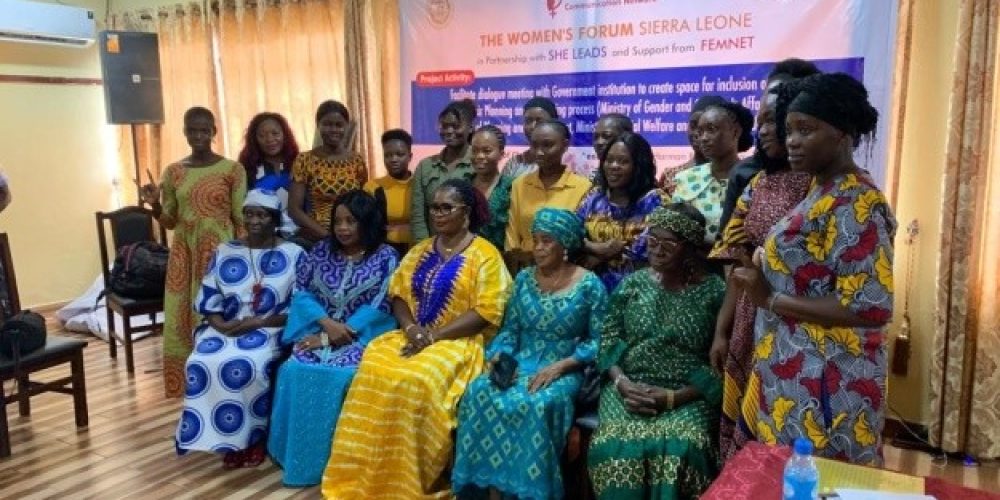
In a bold step toward closing the gender gap in governance, the Women’s Forum, in collaboration with the She Leads program and supported by the African Women’s Development and Communication Network (FEMNET), has convened a high-level strategic meeting in Freetown to chart a path for the active inclusion of girls and young women in Sierra Leone’s policy and national planning processes.
The event brought together participants from across the country, including representatives from civil society organizations, youth-led groups, government institutions, community-based organizations, and international partners. Discussions focused on ensuring that the perspectives, experiences, and aspirations of Girls and Young Women (GYW) are not only heard but meaningfully influence the nation’s policies and programs.
President of the Women’s Forum, Sally Adams, emphasized that inclusion must go beyond symbolic gestures.
Inclusion is not about putting a young woman on a panel for the sake of appearance,” Adams told participants, it’s about creating structural reforms that empower girls and young women to shape decisions that directly affect their futures, we need to ensure they have access to quality education, mentorship, and leadership opportunities.
She stressed that these reforms require deliberate action from both policymakers and development partners, warning that without institutional change, young women’s participation risks remaining superficial.
A strong call emerged for the creation of dedicated platforms where young women can contribute to decision-making without facing stigma or intimidation.
Louie Watkins Harris, representing the Child Rights Commission, underscored the urgency of dismantling barriers both cultural and institutional that prevent girls from speaking up.
Our commission is committed to fostering inclusive platforms where children can participate in policy dialogue confidently, Harris said. We are also exploring how innovation and technology can encourage girls to pursue science and other fields traditionally dominated by men.
Harris noted that while access to education has improved, more must be done to ensure that girls’ knowledge and skills translate into leadership opportunities in politics, governance, and the private sector.
Civil society leaders stressed the importance of grassroots mobilization. Fatmata Kamara, coordinator of a youth-led advocacy group, warned that policy changes alone are insufficient without community support.
If communities do not believe in the value of girls’ leadership, then policies will have little impact, Kamara said, we need continuous engagement to challenge outdated gender norms and promote the idea that young women can lead at all levels.
Her organization runs leadership boot camps for rural girls, equipping them with public speaking skills, basic policy literacy, and the confidence to participate in local governance forums.
Representatives from the Ministry of Gender and Children’s Affairs reaffirmed the government’s commitment to gender-inclusive governance.
Isata Koroma, speaking on behalf of the ministry, noted that the recently adopted National Gender Equality and Women’s Empowerment Policy includes provisions aimed specifically at increasing young women’s participation.
We have set measurable targets for the representation of women, including young women, in policymaking bodies, Koroma said, the government will work closely with partners to monitor progress and ensure these targets are met.
She added that the ministry is advocating for budget allocations to support leadership training and mentorship programs for girls aged 15 to 25.
The private sector also pledged support. David Conteh, Corporate Social Responsibility Manager at a leading telecommunications company, said businesses have a role to play.
Our company has launched an internship program prioritizing young women from underprivileged backgrounds, especially in STEM fields, Conteh explained, economic empowerment is key to ensuring meaningful participation in decision-making.
He added that businesses can help bridge the digital divide by providing affordable internet access and digital literacy training to rural girls.
FEMNET urged that Sierra Leone’s efforts align with global frameworks such as the Sustainable Development Goals (SDGs) and the African Union’s Agenda 2063.
Sierra Leone has an opportunity to lead in West Africa by embedding gender equality in every stage of policy design and implementation, said Amina Ahmed, FEMNET’s program officer, this is not just a women’s issue; it is a development imperative.
Ahmed pledged continued technical support, capacity building, and advocacy to sustain progress.
Participants agreed the meeting must serve as a springboard for tangible reforms. Recommendations included:
Establishing youth policy councils with at least 50% female membership, creating scholarship programs linked to public service internships.
Integrating gender studies into school curricula to build awareness from an early age, expanding safe, child-friendly digital platforms for policy engagement, Sally Adams closed the event with a call for determination and accountability:
We leave here not just inspired but determined, this is the beginning of a movement that will see Sierra Leone’s girls and young women take their rightful place in shaping our country’s destiny.
Stakeholders committed to tracking progress over the next 12 months to ensure the voices of Sierra Leone’s girls and young women are not only heard but acted upon in the nation’s highest decision-making spaces, keeping this expanded one for full coverage, that way you’ll have both in professional format.
Copyright –Published in Expo Times News on Friday,15th August 2025 (ExpoTimes News – Expo Media Group (expomediasl.com)