



By Dadson A. Musa
In a significant step toward boosting energy sustainability and institutional collaboration, the Sierra Leone Police (SLP) is exploring a strategic partnership with the Ministry of Energy to ensure power independence for its nationwide operations and to reinforce the security of critical energy infrastructure.
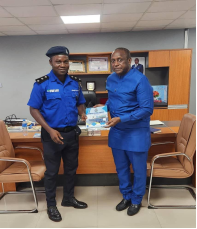
Deputy Superintendent of Police (DSP) Martin Egbenda, Acting Head of Infrastructure at the SLP, led a high-level delegation on behalf of Inspector General of Police William Fayia Sellu during a courtesy visit to Dr. Kandeh Kolleh Yumkella, Energy Sector Lead, on Tuesday, 9 July 2025, at Electricity House in Freetown.
The meeting focused on strengthening cooperation between the two institutions, particularly around energy access for police facilities, protection of energy infrastructure, and supporting Sierra Leone’s transition to renewable energy.
A major highlight of the engagement was the SLP’s proposal to solarize police barracks, divisions, and stations across the country. DSP Egbenda emphasized that the police force is undergoing a digital transformation, with new systems being introduced to enhance law enforcement and service delivery.
Uninterrupted electricity is no longer a luxury it’s essential to modern policing, he stated. Our digital transformation agenda cannot succeed without reliable power.”
While many police installations currently rely on electricity from the Electricity Distribution and Supply Authority (EDSA), this has led to substantial losses for EDSA due to irregular payments and unmetered consumption. With potential disconnections looming, the SLP is now actively seeking alternative, sustainable power solutions including solar energy.
In response, Dr. Yumkella welcomed the SLP’s renewable energy ambition and expressed the Ministry’s readiness to facilitate a transition to solar power for police facilities.
This is a smart and strategic move, he said. Not only will it reduce the SLP’s reliance on the national grid, but it will also help improve energy efficiency, lower operational costs, and support Sierra Leone’s green energy targets.”
He praised the police for taking the lead in energy-conscious reforms, noting that the partnership reflects a forward-thinking approach to governance and public sector innovation.
Beyond electrification, the SLP committed to playing a larger role in protecting national energy assets. DSP Egbenda proposed the deployment of dedicated police posts at key EDSA facilities nationwide to prevent vandalism, theft, and sabotage ongoing threats that hinder power delivery.
The two institutions also discussed plans to establish a joint security task force, composed of police and military personnel, to assist EDSA in its inspection and enforcement operations. The task force would conduct unannounced raids to curb illegal connections, particularly in factories, hotels, and high-consumption residences in urban centers like Freetown.
This evolving partnership between the Ministry of Energy and the Sierra Leone Police signals a bold new chapter in public sector cooperation. It highlights the critical intersection between energy security and national development, showcasing how institutions can work together to deliver tangible benefits for citizens.
By embracing solar energy and reinforcing infrastructure security, both institutions are helping to drive Sierra Leone’s transition to a modern, resilient, and low-carbon economy, power must flow securely, and security must be powered reliably, said Dr. Yumkella. That is the foundation of a forward-looking Sierra Leone.
As the country gears up for long-term infrastructure modernization, the collaboration between the SLP and the Ministry of Energy stands as a model of strategic synergy, where technology, sustainability, and security go hand in hand.
Copyright –Published in Expo Times News on Monday,14th July, 2025 (ExpoTimes News – Expo Media Group (expomediasl.com)