




by Chernor M. Jalloh
Lecturer of Governance, Leadership & Development Studies
IPAM – University of Sierra Leone
At first glance, Sierra Leone’s current development vision—articulated in the Medium-Term National Development Plan (MTNDP) 2024–2030, launched in January 2024 by President Julius Maada Bio—reads as a bold, transformative blueprint. Extending beyond the previous five-year cycle, this seven-year strategy centres on the government’s “Big Five Game Changers”: Feed Salone (food security), Human Capital Development, Youth Employment, Infrastructure, Technology & Innovation, and Public Service Reform. It further aligns with the Sustainable Development Goals and AU Agenda 2063, aiming for sovereign, homegrown progress. Yet even with its expansive scope, the plan risks repeating a familiar pattern: the internal entrenchment of dependency through domestic elites who advance these external models, often at the expense of genuinely participatory and inclusive development.
Drawing inspiration from Cardoso and Faletto’s critical interpretation of Dependency Theory, we are reminded that foreign domination alone does not explain underdevelopment in the Global South. Rather, it is the “social practices of local groups and classes which try to enforce foreign interests… because they may coincide with values and interests that these groups pretend are their own.” This insight, often overlooked in policy circles, lays bare a truth Sierra Leone must confront: our development crisis is not only international—it is internalized.
Development by Performance, Not Transformation
Take, for example, the widespread adoption of foreign-defined development models. The MTNDP speaks the language of “transformative governance,” “inclusive growth,” and “sustainable development”—all buzzwords imported from global institutions like the World Bank and UNDP. These frameworks are not inherently problematic, but the issue lies in who they serve and how they are implemented.
The state’s over-reliance on donor-funded projects—from health to education to agriculture—suggests a model of development more performative than transformative. Policies are tailored to fit donor logics, not grassroots realities. Ministries draft “results frameworks” and “logical matrices” to tick boxes for international partners, while rural communities remain locked in cycles of food insecurity, inadequate healthcare, and poor infrastructure.
In this regard, Sierra Leone’s bureaucracy increasingly functions as a contractor class, more attuned to satisfying external benchmarks than internal structural change. This is exactly what Cardoso and Faletto warned against: a comprador elite that internalizes and enforces foreign interests as if they were national imperatives.
Extractive Dependency Dressed as Investment
One of the clearest illustrations of internalized dependency is the government’s attitude toward foreign direct investment (FDI) in the extractive sector. Mining deals in bauxite, rutile, and iron ore are often touted as national victories— “bringing jobs,” “boosting revenue,” and “showing investor confidence.” Yet these agreements are typically shrouded in opacity, heavily skewed in favor of multinational corporations, and guarantee minimal returns to local communities.
The 2019 review of the mining lease agreement with SL Mining in the Marampa region, for example, exposed the state’s fragile negotiating position and regulatory weakness. While the government claimed to act in the national interest, the reality was a public dispute that cost Sierra Leone not only in legal fees and lost production, but in international credibility. Worse still, local elites—both political and corporate—defended the FDI logic, citing the need for “foreign expertise” and “global capital,” even when communities demanded local ownership, environmental protection, and fair compensation. In essence, the interests of external capital became the values of domestic powerholders.
Aid Conditionalities and Technocratic Submission
Aid remains a double-edged sword in Sierra Leone’s development story. From the World Bank’s support to education reform, to UNICEF’s interventions in health and child protection, external assistance has undeniably filled gaps. But it has also disempowered the national policy space, reinforcing a dependency mindset among public officials. The push for Public-Private Partnerships (PPPs) and public service reform, encouraged by the World Bank and IMF, often comes with subtle conditionalities. The “rationalization” of the public wage bill, for instance, has led to understaffed classrooms, empty rural clinics, and a demoralized civil service. Yet, technocrats trained in foreign institutions defend these policies as “necessary” for macroeconomic stability—repeating external orthodoxy without critical adaptation to local needs.
Whose Modernization, Whose Agenda?
Modernization in Sierra Leone often seems targeted more at international admiration than at grassroots transformation. Consider the emphasis on digitization, smart cities, and urban renewal in Freetown—projects that look good in policy reports and international forums but remain disconnected from the rural majority still waiting for boreholes, electricity, and feeder roads.
Similarly, the obsession with achieving “Middle-Income Country” status by 2035 reflects an aspirational mimicry of global development benchmarks rather than a sober assessment of national priorities. Who benefits from these status markers? What does it mean to become “middle-income” if inequality deepens, youth unemployment persists, and agriculture—the backbone of the economy—remains under-mechanized?
A Call for Conscious Development
The problem, then, is not just who funds our development, but who defines it—and why local actors defend those definitions. As Cardoso and Faletto suggest, dependency is sustained when local power blocs internalize foreign agendas and present them as their own—not because they are coerced, but because these agendas benefit their class position.
To break this cycle, Sierra Leone must reimagine development as a sovereign, citizen-driven process, not a performance for donors or investors. This means:
- Building local knowledge systems and policy solutions;
- Investing in agriculture, rural infrastructure, and artisanal industries;
- Reclaiming policy autonomy in education, health, and finance;
- And, most importantly, fostering an intellectual and political class that sees development as liberation, not imitation.
Conclusion: The Enemy Within
Sierra Leone’s development challenge is no longer simply about breaking the chains of colonial legacies or resisting neocolonial pressures. The more pressing challenge is confronting the “enemy within”—the domestic classes and institutions that sustain dependency by aligning with external interests.
Until we stop mistaking foreign approval for national progress, and until our internal power structures are decolonized, true development will remain elusive. It is time we asked: are we building Sierra Leone for ourselves—or managing it on behalf of others?
Viewpoint – Back page
Freetown, Wellington – How community leaders led reconciliation efforts in post-war Sierra Leone
By Mohamed Sinneh Kamara
One major issue post-war Sierra Leone had to deal with was reconciling perpetrators of violence with members of the communities they lived in prior to the war.
Many former combatants couldn’t return home for fear of persecution for their role in meting violence on their own people. For some of these, it was their families, particularly their parents, who paid their price for their actions.
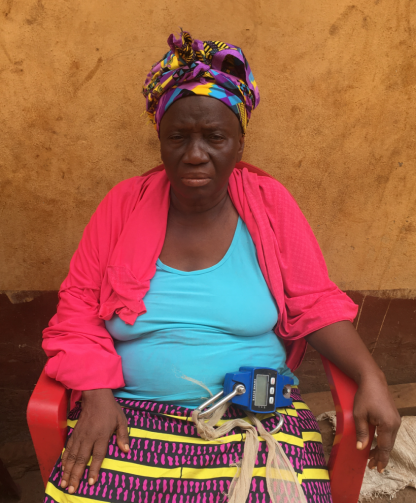
In Wellington in the eastern part of the Sierra Leonean capital, Freetown, Chief Yagbome Posseh Bangura had a first had experience of this situation. First, she had the task of convincing her people to return to the community after the war.
“During the war, people fled in search of safety,” narrates the female traditional leader in an interview at her residence at 84 City Road, Wellington.
Wellington is one of the largest areas of Freetown. Chief Bangura’s jurisdiction entails Rokupa, Railway Line, City Road and Portee, among other communities. City Road, where the child lives, is along Old Road. Like the rest of the east end, it is highly populated, with many of the residents engaging in petty trading and other informal economic activities like fishing.
Many of the residents of these communities and beyond sought refuge at the Cline Town Camp, which is known popularly for hosting displaced people during the war.
According to Chief Bangura, regular supplies of food and other provisions made her people reluctant to leave the camp after the war. But she also realized that many had no place to return to after their houses had been burnt down during the war.
She eventually succeeded to convince many to return, with her providing help to some who needed it. She even personally provided shelter to children who lost their parents to the war, those who were amputated and those who lost their families. Others who lost their houses in the community were provided help in the form of clothing, etc.
Soon after, came the issue of reconciliation, as among those who return where the very ones who caused the havoc.
Sheik Musa Kamara, Chief Imam of Masjid Joshua at Old Railway Line, Wellington, was at the heart of dealing with this issue. He recalled how the community people were angry with the perpetrators, many of whom were their own children, who took up arms to destroy their own communities.
“These perpetrators later returned to their community after the war has ended to plead for forgiveness,” he said.
As a religious leader, Imam Kamara said his advice was that anything that happens, is the will of God.
“If a perpetrator came and beg sincerely, it’s the right of the people to forgive them and not to send them away to the bush, where they once stayed. Sending them away will cause more,” he said.
Parents whose children were rebels sought prayer for them from the Imam.
These parents themselves had to deal with angry community members for the actions of their children. One of them, Ibrahim Koroma, is now late. But the community people recall his explanation that his son was captured by rebels in the mining district of Kono, where he had gone in search of job, and forced to join their ranks. Koroma reported said that at the time, his son had no chance of escaping – either he joined the rebels or face certain death.
While some parents, like Ibrahim, understood the plight of their children who had to get involved with the rebels reluctantly, others couldn’t stand it; they rejected their children as part of their families. Some, out of embarrassment, even stayed away from the Jamaa.
When Imam Kamara realized this, he decided to take action by preaching about forgiveness and unity. His mosque also served as a counselling centre for the former fighters. He said that led to many of the community members – parents and neighbours – forgiving each other. Through this, some of the former combatants themselves became the reason for their former colleagues to return.
According to the TRC report: Volume 3, Chapter 7, Paragraph 20, at the community level, reconciliation is fostered or facilitated by understanding and sharing experiences and by creating the conditions for community acceptance of wrongdoing.
“Return to the community by perpetrators involves accountability on the part of those perpetrators. The community, represented by elders, religious leaders and chiefs, acknowledge the wrongdoing symbolically on behalf of all in the community, thus allowing for the entry of the perpetrators back into the community. It is important to note that the community cannot forgive in the name of the individual wronged; it can only acknowledge the harm done to the community. The acknowledgment of wrongdoing helps pave the way for the victim and perpetrator to live together. The approval and support of the community in such a reconciliation process is necessary in order to make reconciliation sustainable,” the report notes.
This article brought to you with support from the Africa Transitional Justice Legacy Fund (ATJLF)
through the Media Reform Coordinating Group (MRCG), under the project ‘Engaging Media and Communities to Change the Narrative on Transitional Justice Issues in Sierra Leone.
Copyright –Published in Expo Times News on Wednesday, 20th June, 2025 (ExpoTimes News – Expo Media Group (expomediasl.com)