


Viewpoint
By Emma Black
When faced with crises, the natural reaction is often to retreat to close off, respond in pieces, and act alone, But Sierra Leone’s health challenges are deeply interconnected, and so is the Ministry of Health’s response.
Amid an active Mpox outbreak, rising systemic pressures, and growing public concern, the Ministry made a conscious decision: to bring together the nation’s health actors in a transparent, accountable, and coordinated forum. This decision culminated in the recently concluded 2025 National Health Summit, a gathering that has sparked lively public debate and rightly so.
Sierra Leoneans know hardship intimately, they understand the frustration of medicine shortages, the anxiety of delayed transport, and the fear of infections spreading faster than information. So, it is only natural to ask tough questions. The Ministry of Health welcomes this scrutiny, not with defensiveness, but with thoughtful reflection.
The National Health Summit was not a celebration, but a sober reckoning a critical moment to assess where the health system stands, acknowledge its failings, and urgently chart what must change. Stakeholders confronted resource gaps, implementation challenges, and evaluated collective progress against promises made to the public.
A focal point of the summit was Mpox. Beyond dry statistics, the event prioritized community voices especially from those who directly experience the realities of the outbreak. The aim: to focus on what matters most breaking the chain of transmission.
The summit’s participants delved into strategies to strengthen contact tracing, enhance health education, and mobilize communities for early detection and reporting. Frontline health workers, surveillance teams, local leaders, and civil society representatives offered crucial insights on weaknesses and areas demanding scale-up, community leaders influenced the conversation directly, and these insights have already shaped improvements in Mpox response strategies, including deployment, communication, and supply chains.
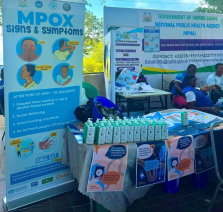
Aware of the risks public health gatherings might pose, organizers prioritized safety. Most attendees were frontline health personnel and Ministry staff many of whom were vaccinated against Mpox. Strict health protocols were rigorously followed:
Frequent distribution of hand sanitizer Installation of handwashing stations across the venue Regular public announcements on Mpox prevention Prominent placement of informational banners Sanitizing speakers before and after podium use
These precautions were guided by public health protocols and coordinated with national emergency teams. The summit demonstrated that safe, essential dialogue can and must happen, even amid health crises.
Another intentional choice was accommodation logistics. Ensuring that participants from outside Freetown could stay close to the venue enabled full and consistent engagement across all three days. This avoided long commutes or partial attendance, fostering real-time, robust dialogue—including critical discussions that shaped urgent next steps for Mpox and broader health priorities.
Understandably, some ask: Could the funds spent on this summit have been better used to buy drugs, ambulances, or supplies?
The Ministry assures that these essential needs continue to be funded through dedicated budgets. Resources for outbreak response, logistics, workforce support, and essential services have not been compromised. The summit was primarily funded by health partners who recognize that coordination, learning, and alignment are vital pillars of preparedness and effective response.
Past health crises, like Ebola and COVID-19, taught us that health systems must simultaneously respond to emergencies and sustain routine services. This summit was part of that dual approach a clear sign that Sierra Leone’s health system refuses to buckle under pressure but instead strives to adapt, listen, and improve.
The summit also confronted a pressing new reality: the gradual withdrawal of traditional overseas development partners. Sessions focused on sustainable health financing, innovative funding mechanisms, and smarter partner coordination were vital. Building financial resilience is only one piece of the puzzle; the true goal is a health system that can withstand shocks, adapt swiftly, and continue delivering care, even in times of crisis.
In fact, it was at a similar high-level gathering that the Ministry recently secured an additional $15 million from a development partner, with more discussions ongoing. These national and international convenings, when well executed, unlock crucial, tangible support for the health sector.
Much of the initial and ongoing funding for the Mpox response has come from health development partners responding directly to the Ministry of Health and National Public Health Agency’s joint advocacy that continues tirelessly.
One of the summit’s most powerful outcomes came in its closing moments: development partners publicly pledged full support for the Ministry’s agenda and its framework of the 4As Alignment, Accountability, Accompaniment, and Acceleration, this landmark commitment means partners will follow the Ministry’s lead to ensure that every health investment from vaccines to ambulances better meets the real needs of Sierra Leoneans.
The Ministry welcomes the intense public discussions surrounding the summit, this engagement shows just how deeply health matters to the people. It also invites recognition of the difficult, complex choices that arise when managing emergencies alongside system building.
No one at the Ministry claims perfection. But they do believe in showing up, listening deeply, and holding themselves accountable in full view of the people they serve.
Copyright –Published in Expo Magazine, May-June 2025 Edition Vol.3, No.4, (ExpoTimes News – Expo Media Group (expomediasl.com)