

By Aminata Bah
Education is often called the great equalizer—a fundamental right that empowers individuals, opens doors to opportunity, and fosters societal development. However, for millions of children around the world, this basic human right remains out of reach due to poverty, conflict, or discrimination. The importance of ensuring access to quality education goes beyond learning to read and write; it is about creating the foundation for a more just and equitable world.
In developing countries, particularly in regions plagued by conflict or poverty, children face insurmountable barriers to accessing education. In Sierra Leone, for example, despite significant progress, many children, especially girls, are still unable to attend school due to socio-economic challenges, early marriage, or gender-based violence. This deprivation of education hinders not only the personal growth of these children but also the development of the entire nation.
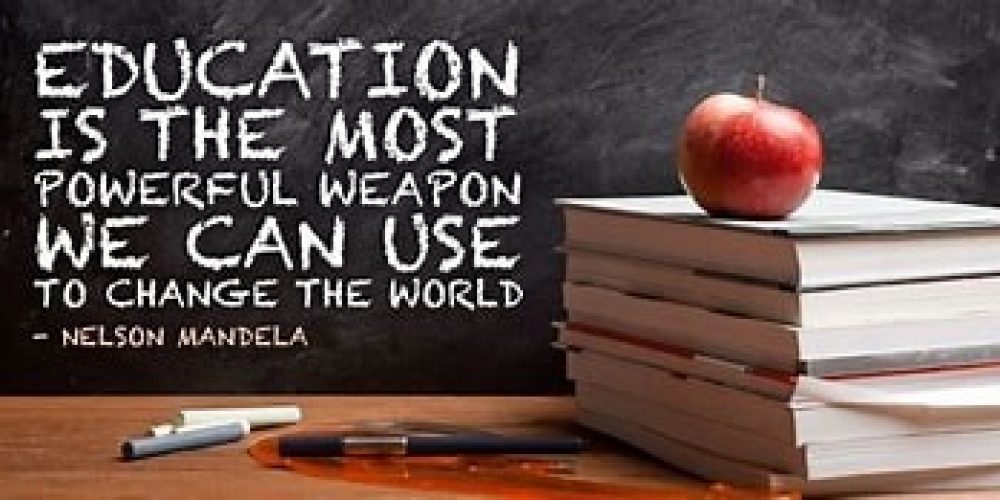
Education is widely recognized as one of the most powerful tools for achieving personal growth, national development, and global progress. It empowers individuals with the knowledge and skills they need to break cycles of poverty, contribute to their communities, and participate meaningfully in society. Yet, despite its clear importance, millions of children around the world are still denied their right to education due to systemic inequalities, political instability, and cultural barriers. The right to education is not just a moral obligation but a fundamental human right, enshrined in international conventions, and it is essential to securing a better future for generations to come.
The right to education is recognized as a fundamental human right in numerous international agreements, including the Universal Declaration of Human Rights (UDHR), the International Covenant on Economic, Social, and Cultural Rights (ICESCR), and the Convention on the Rights of the Child (CRC). Article 26 of the UDHR, adopted by the United Nations in 1948, explicitly states that “everyone has the right to education.” It emphasizes that education should be free, at least at the elementary level, and that access to higher education should be based on merit rather than economic status. The CRC, which Sierra Leone and many other countries have ratified, further strengthens the right of children to access education, underscoring the critical role that schooling plays in the development of young people.
Despite these legal frameworks, millions of children, especially in developing countries, remain out of school. According to UNESCO, 244 million children and youth are not currently receiving any form of education, and many of these children are from marginalized groups, including girls, refugees, children with disabilities, and those living in poverty. This exclusion from education is a direct violation of their rights and poses serious challenges for global efforts toward achieving equality and sustainable development.
In many parts of the world, education remains an unattainable dream for millions due to a variety of interconnected barriers. Poverty is one of the most significant obstacles. Children from low-income families often have to forego education to work and contribute to their household’s income. Without adequate financial resources, many families cannot afford school fees, uniforms, textbooks, and other necessary materials, even where education is nominally free.
The right to education is a lifeline for future generations. It holds the key to breaking the cycles of poverty, inequality, and conflict that hold back individuals and entire nations. While significant progress has been made, there is still much work to be done to ensure that every child, regardless of their circumstances, has the opportunity to learn and thrive. Governments, civil society, and the international community must work together to overcome the barriers to education and make this fundamental human right a reality for all. Only then can we build a future where every individual has the opportunity to reach their full potential and contribute to a more just and equitable world.