



A New Dawn of Leadership – What President Bio’s ECOWAS Chairmanship Means for Sierra Leone & West Africa
By Jensen Brian Abass Cummings
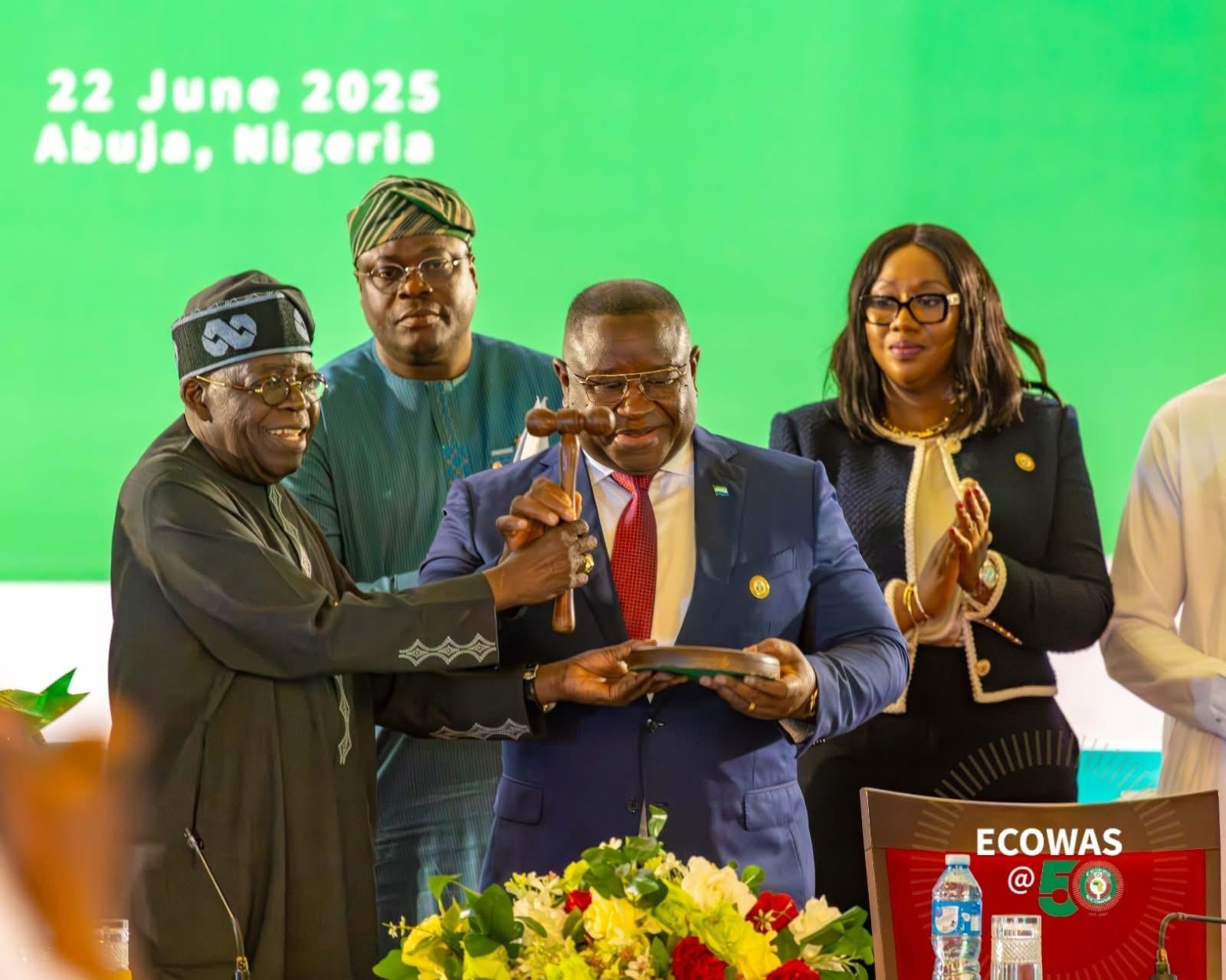
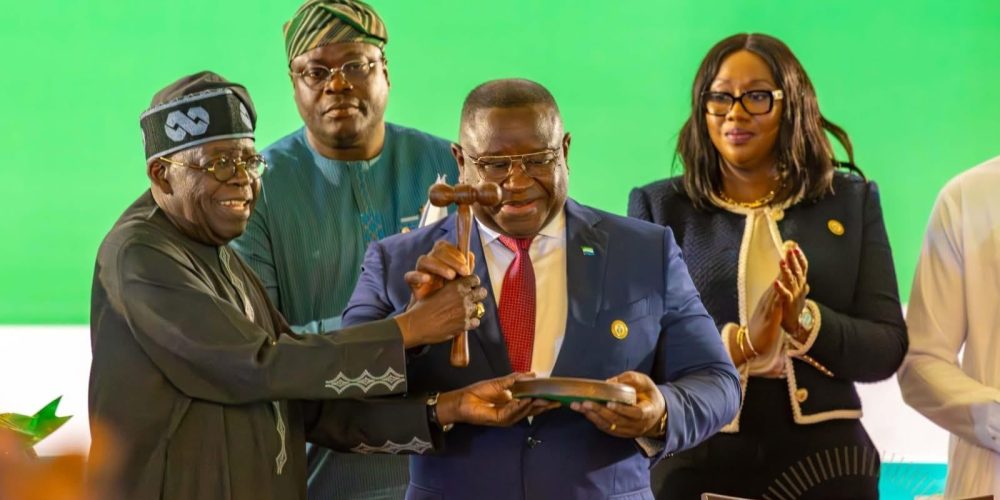
When President Julius Maada Bio was announced as the new Chairman of the Authority of Heads of State and Government of ECOWAS, it marked not just a ceremonial rotation of leadership, but a powerful symbol of how far Sierra Leone has journeyed from its past to its present place on the regional stage. For many Sierra Leoneans, the news came as a moment of national pride—a reminder that the country, once ravaged by war and political instability, now finds itself entrusted with steering one of the most powerful regional blocs in Africa at a time of serious turbulence.
What Is ECOWAS and Why the Chairmanship Matters
ECOWAS, the Economic Community of West African States, has long played a pivotal role in the region’s political, economic, and security affairs. But today, the bloc stands at a crossroads. Several member countries have been rocked by military coups, governance crises, terrorism, and rising economic challenges. Trust in regional unity has been shaken, and the future of West Africa’s collective aspirations is uncertain. Against this backdrop, President Bio’s chairmanship carries weight not just in symbolism but in potential impact.
Implications for Sierra Leone
For Sierra Leone, this new responsibility opens the door to wider diplomatic engagement and economic opportunity. President Bio, now representing the voice of 15 West African nations, will be at the centre of critical decisions on peace, security, economic integration, and political stability. This raises Sierra Leone’s visibility on the global stage, offering chances to attract international partnerships, investment flows, and infrastructure support. It strengthens Sierra Leone’s voice in multilateral forums like the African Union and the United Nations, where decisions affecting the region’s destiny are negotiated.
But beyond diplomacy, the chairmanship provides a platform for real leadership in healing a fractured region. With military regimes in countries like Mali, Guinea, Burkina Faso, and Niger having distanced themselves from ECOWAS, the need for bridge-builders is greater than ever. President Bio has a unique profile to answer that call. His governance philosophy, anchored in human capital development and democratic reform, could serve as a blueprint for reconciliation and democratic transition in post-coup states. His experience in rebuilding Sierra Leone’s institutions after civil war places him in a position to advocate for peacebuilding that goes beyond military intervention.
There is also the issue of security. As terrorism and armed insurgency continue to destabilize the Sahel and spill over into coastal states, ECOWAS under Bio’s leadership must rethink its collective approach. This means enhancing regional military cooperation, improving intelligence sharing, and addressing the underlying socio-economic grievances that fuel extremism. It will require balancing firmness with diplomacy—something Bio has demonstrated in Sierra Leone through his reforms in the security and justice sectors.
Economically, President Bio could reinvigorate the long-stalled dream of deeper integration. The ECOWAS vision of a single currency, free trade, and unrestricted movement of people has yet to be fully realized. With rising youth unemployment and limited cross-border cooperation, Bio’s leadership could champion reforms that prioritize jobs, entrepreneurship, and infrastructure linkages across member states. His tenure could also see a renewed push for sustainable development projects in agriculture, energy, education, and digital transformation—areas where Sierra Leone has already made modest gains that could be scaled across the region.
Challenges Ahead
Yet, this new role does not come without challenges. President Bio must now navigate complex geopolitical dynamics, including strained relations with countries under military rule, public scepticism toward ECOWAS in some member states, and the ever-present tension between national interests and regional commitments. He must demonstrate not only the political will to unite but also the administrative capability to manage crises, coordinate diverse leadership styles, and deliver tangible results.
What It Means for the West African Region
For West Africa, this is a moment that demands thoughtful and inclusive leadership—one that understands the fears of ordinary citizens, listens to the aspirations of the youth, and is unafraid to confront the hard truths of governance failure. For Sierra Leone, it is a historic chance to lead by example, to shape the regional narrative, and to show the world that leadership is not about size or wealth, but vision, resilience, and readiness.
Conclusion: A Moment of National Pride and Regional Responsibility
President Bio’s chairmanship of ECOWAS is more than a diplomatic achievement. It is a call to action—a mandate to stabilize, to integrate, and to inspire. Whether he succeeds will depend not just on speeches and summits, but on how well he can translate this moment of regional power into a legacy of transformation for both Sierra Leone and West Africa.
More Info
His Excellency President Dr. Julius Maada Bio officially assumed the Chairmanship of the Economic Community of West African States (ECOWAS) on Saturday, June 21, 2025, Authority of Heads of State and Government, marking a proud milestone as the first Sierra Leonean leader to hold this esteemed role. The announcement has ignited national pride, symbolizing a renewed pledge to unity, peace, security, and sustainable development across West Africa.
Renowned for his democratic leadership and dedication to social and economic progress, President Bio is viewed as a transformative figure poised to guide ECOWAS through turbulent times. He has outlined four strategic priorities: restoring constitutional order, deepening democracy, revitalizing regional security, unlocking economic integration, and building institutional credibility. These pillars aim to foster stability and prosperity. President Bio expressed gratitude to his predecessor, Nigeria’s President Bola Ahmed Tinubu, for his leadership in regional dialogue. “I accept this responsibility with full awareness of its magnitude, Bio stated, acknowledging the trust placed in him and Sierra Leone. As West Africa navigates critical challenges at this hour, Bio’s historic leadership offers a beacon of hope for regional advancement.
Speaking at the ECOWAS Summit held in Accra, President Bio declared his commitment to prioritising four critical areas during his tenure, aimed at addressing the region’s most pressing challenges and unlocking its full potential.
“As Chair, I will prioritise four key areas,” President Bio stated. “First, the restoration of constitutional order and the deepening of democracy; second, the revitalisation of regional security cooperation; third, the acceleration of economic integration across our sub-region; and fourth, the strengthening of institutional credibility within ECOWAS.”
These priorities come at a time when the West African region faces a complex mix of security threats, democratic backsliding, and economic strain. President Bio’s vision seeks to re-establish confidence in ECOWAS as a responsive and people-centered institution.
He emphasised the need for collective action and solidarity among member states, especially in tackling unconstitutional changes of government and terrorism, both of which have undermined regional peace and stability in recent years.
President Bio also acknowledged the contributions of his predecessor, Nigerian President Bola Ahmed Tinubu, for his efforts in leading ECOWAS through a challenging period.
“I also wish to acknowledge and commend the outstanding leadership of my predecessor and dear brother, President Bola Ahmed Tinubu,” he said.
President Bio’s assumption of the ECOWAS chairmanship has been widely welcomed, with regional leaders expressing confidence in his ability to guide the bloc through its current challenges and deliver meaningful reforms.
As Sierra Leone’s head of state, President Bio brings to the role a reputation for democratic governance, peacebuilding, and institutional reform—qualities many believe will serve ECOWAS well in the coming year.
Copyright –Published in Expo Times News on Wednesday, 20th June, 2025 (ExpoTimes News – Expo Media Group (expomediasl.com)